
SenCe
Tasks Undertaken
Primary and secondary research analysis, Creative ideation, User journey mapping, Storyboarding, Brand development, Business model design, Company and competitor analysis
Background:
This project blends creative problem identification and ideation with strategic entrepreneurial concepts. The problem space evolves across different phases starting from my perception of the problem based on my experiences and moving on to the target group perceptions of the problem based on their lived experiences. Secondary research was used to further understand and define the problem space and guide design of potential interventions. Finally, key entrepreneurial concepts such as the lean business model canvas and value-strategy model were used to develop the business strategy outlook for the intervention.
Primary and Secondary Research
Primary research was conducted through semi-structured interviews aiming to understand factors of discomfort felt by attendees at recreational social gatherings like at sports games, concerts and nightclubs. Thematic coding was used to derive key insights and guide the process of refining the problem statement. The interviewees were between the age of 22 and 30
Key Insights from primary research after thematic mapping:
Sound and sight are the primary senses driving experiences and in clubs, these are typically overbearing
Coping with negative experiences often involves leaving the premise. This is often a temporary relief response and causes a gap in the overall experience
Having sensory stimuli that are in sync would help improve the experience
Techno music and loud bass is undesirable or being “too much”
Emotional connection is an important driver that guides experience amongst attendees
Safety does not relate only to security. It extends to elements like sensory control
Secondary research primarily involved a precedent study to evaluate existing interventions. A SWOT analysis was carried out for the following three precedents:
Loop earplugs
Silent discos
Calm tents used in the Glastonbury Festival in England
Quadrant analysis was used to compare these precedents against different parameters like costs, personalisation and sensory appeal
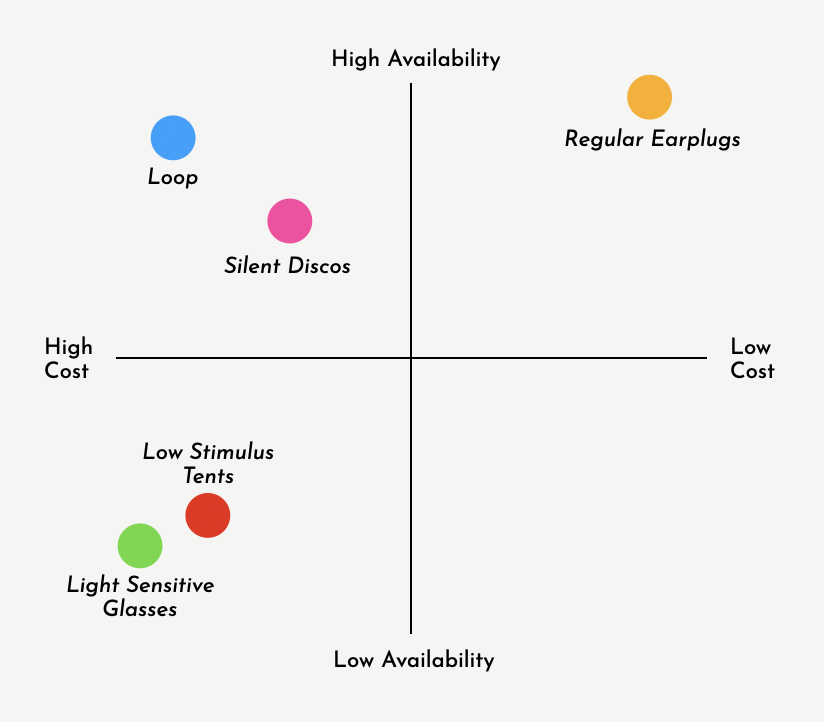
(Quadrant analysis of precedents - Evaluating availability and costs of set up and consumption - Ravi Arun. (2025) Assessment 2. Created for Creativity and Entrepreneurship - DDES9015, University of New South Wales)
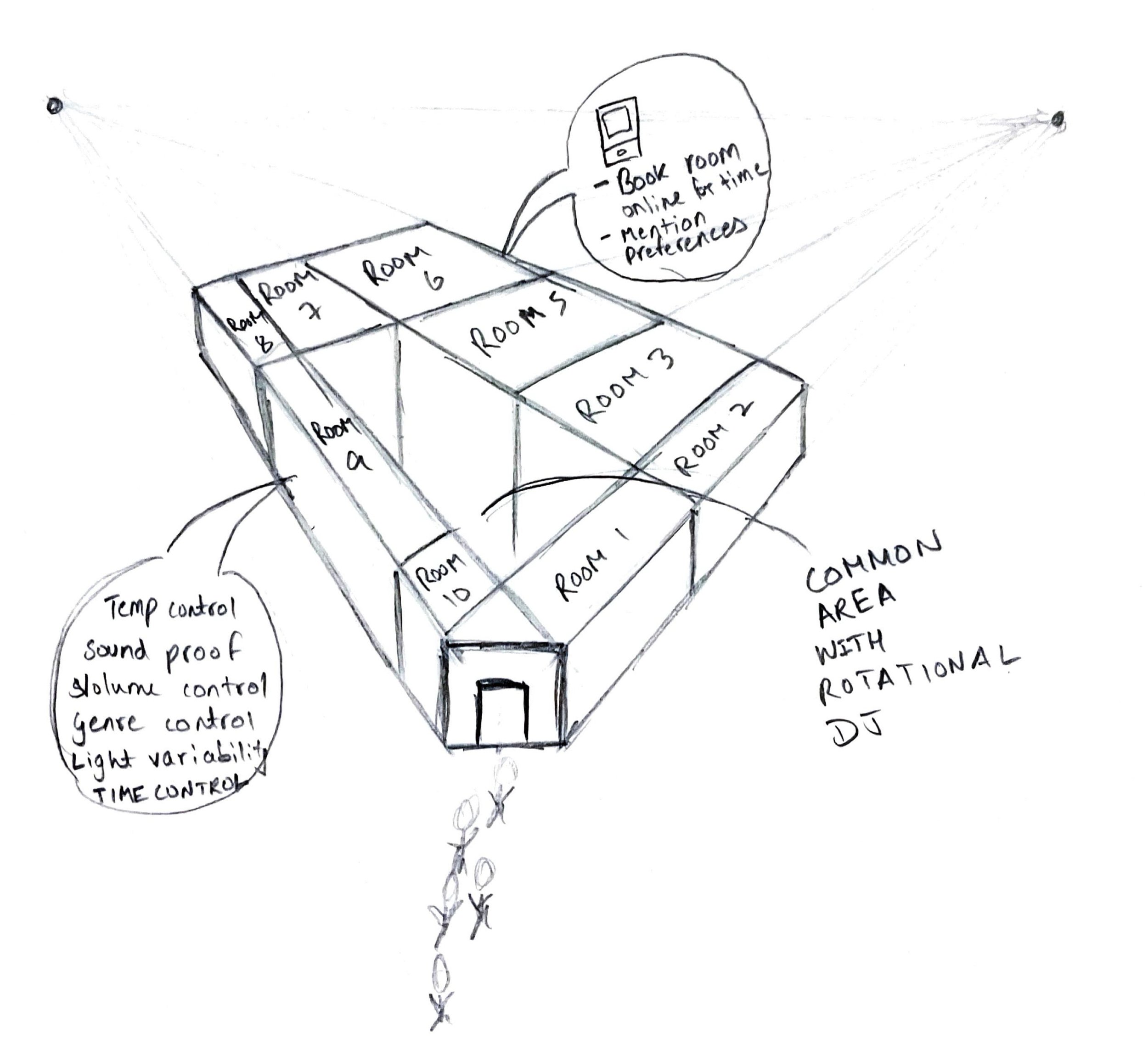
Overview of how the intervention experience can be structured
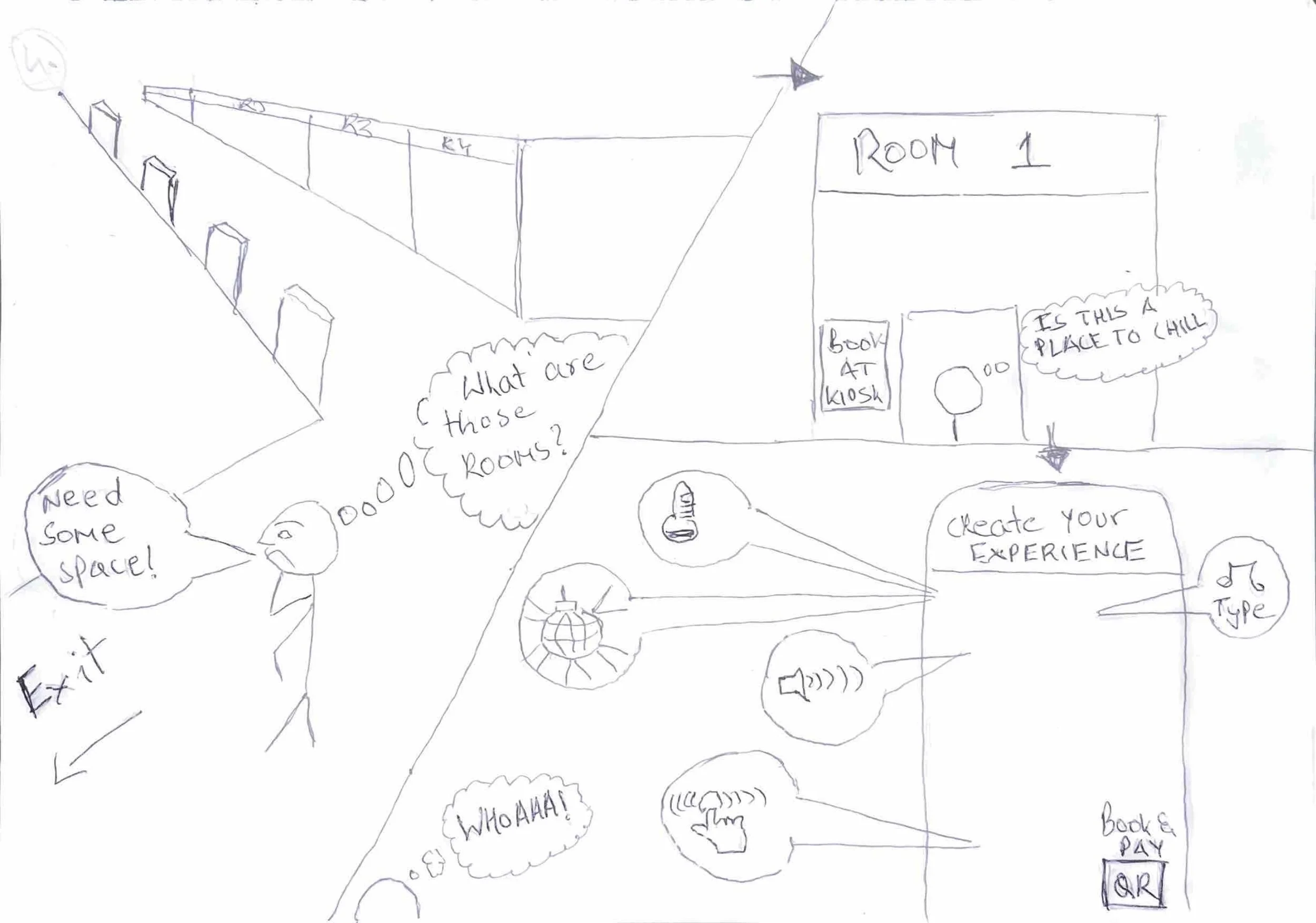
Decides to leave, finds pods and instructions on use
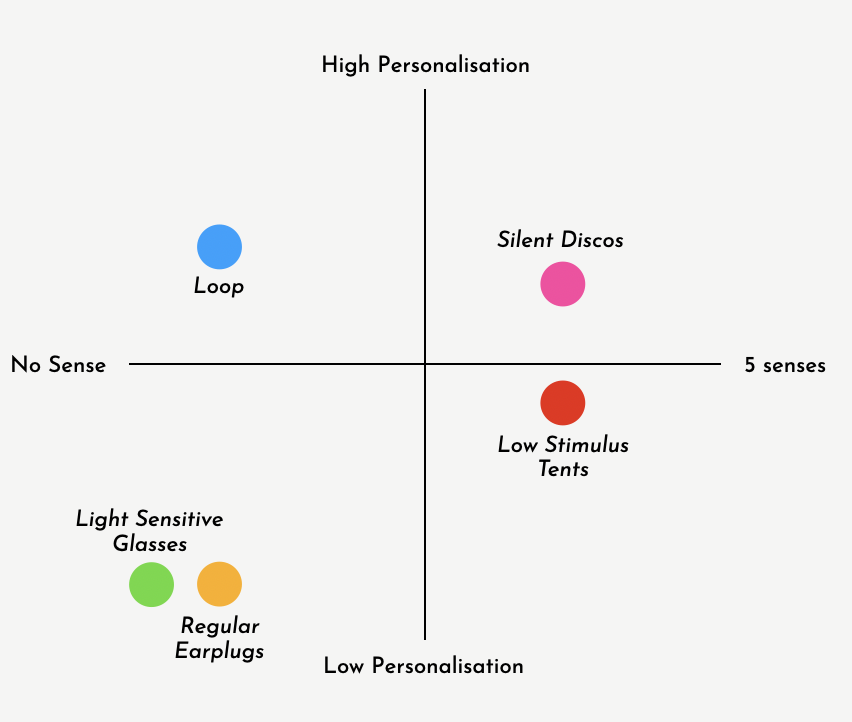
(Quadrant analysis of precedents - Evaluating ability to personalise and appeal to different senses - Ravi Arun. (2025) Assessment 2. Created for Creativity and Entrepreneurship - DDES9015, University of New South Wales)
Problem Statement (Refined across iterations based on research insights):
How could the senses of light and sound be regulated at nightclubs to help visitors immerse themselves while feeling safe and comfortableRegulate the senses of sight and sound for people to immerse themselves and feel comfortable?
Tools
Adobe Illustrator
Course Name
Creativity and Entrepreneurship
Project Type
Individual (Course Work)
Year
November 2025
Initial Concept Development and Storyboard Prototyping
After using a range of ideation techniques such as mash-up, worst possible ideas and block busting, I came up with an experience based intervention that allows nightclub attendees to control sensory stimulation within the premise of the nightclub. The experience involves a cluster of rooms/nodes around the main premise of nightclub with customisable features in relation to sensory stimulation. Concept development and prototyping involved sketches and storyboarding.
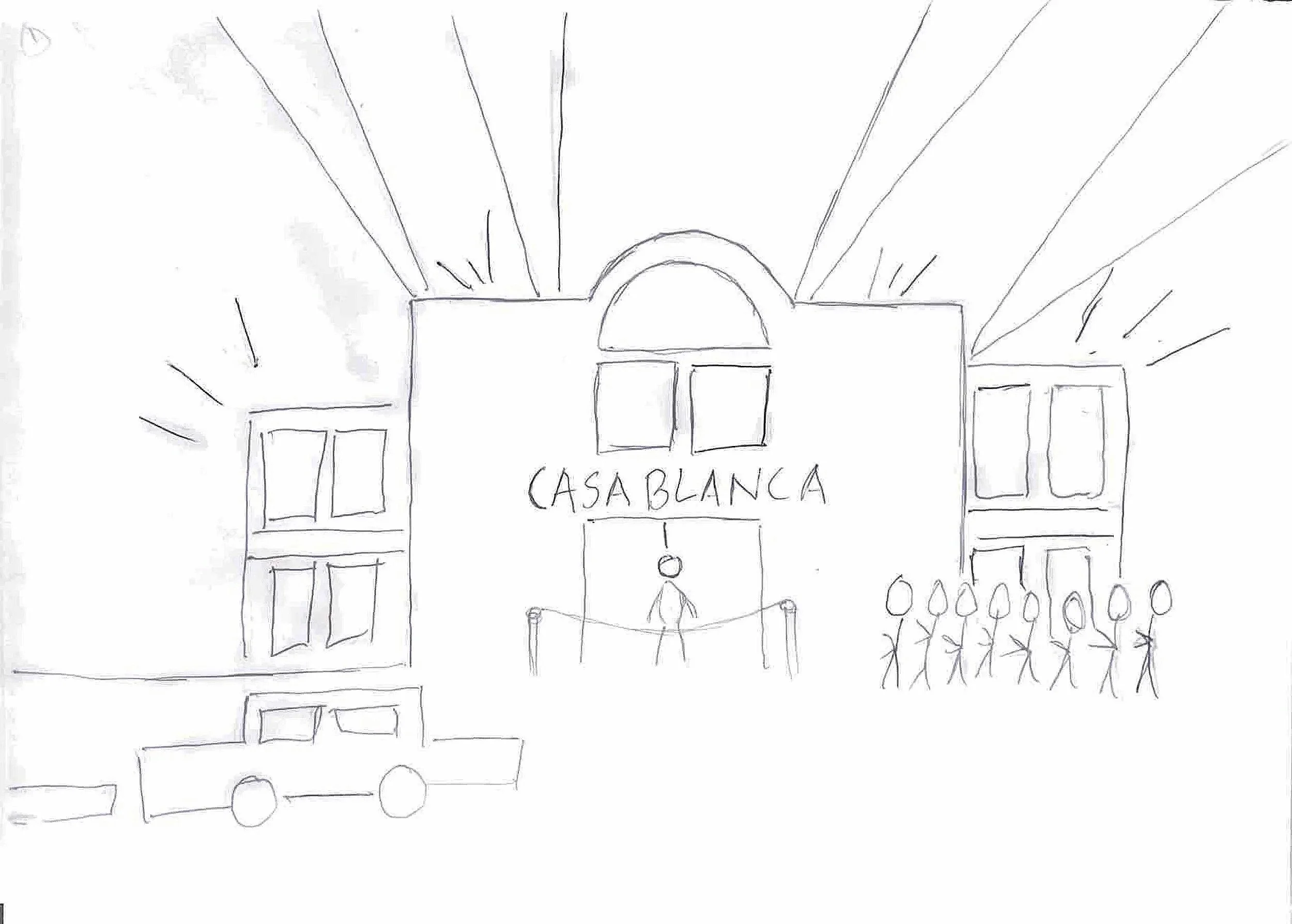
Entering club
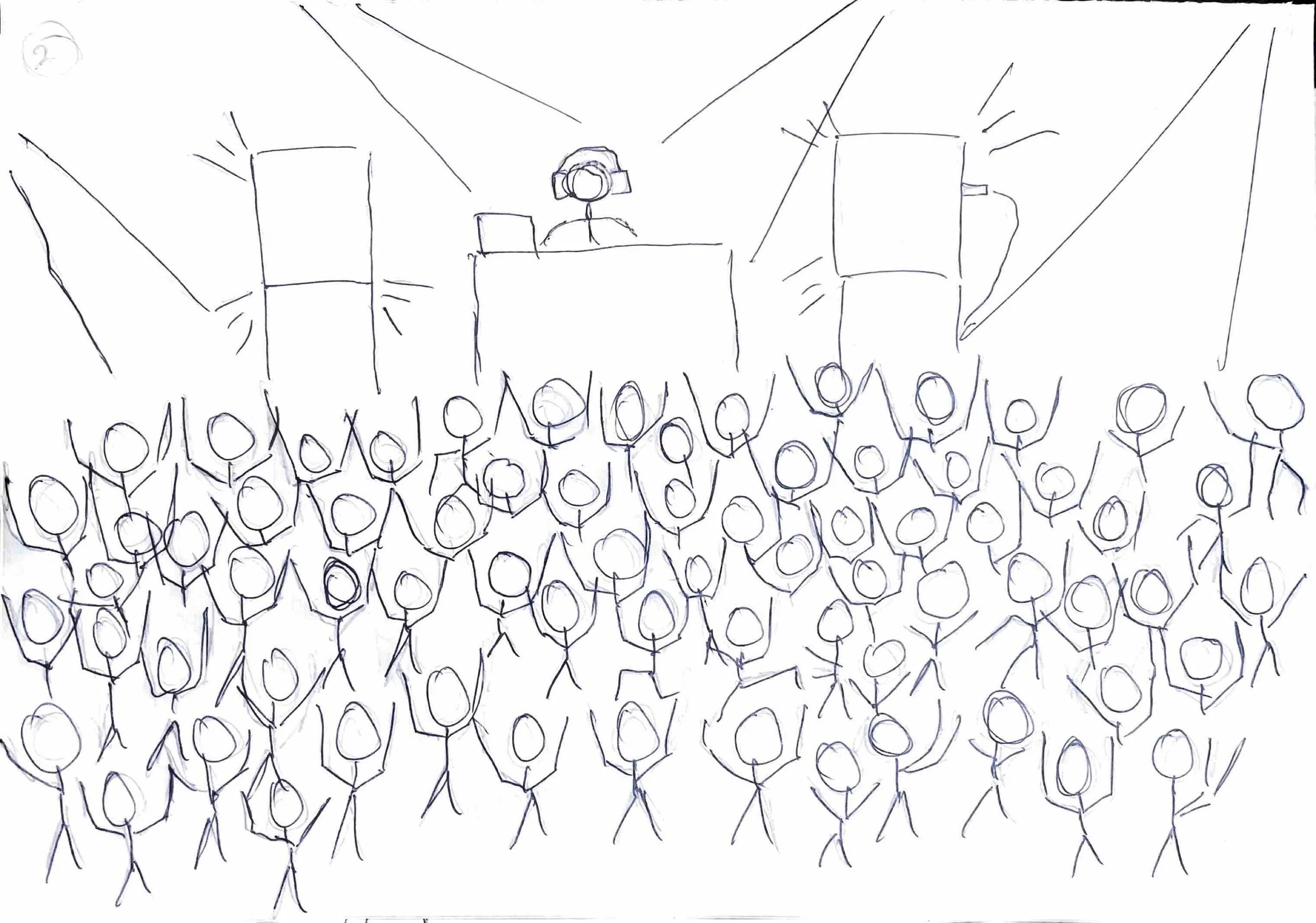
Experiencing nightclub
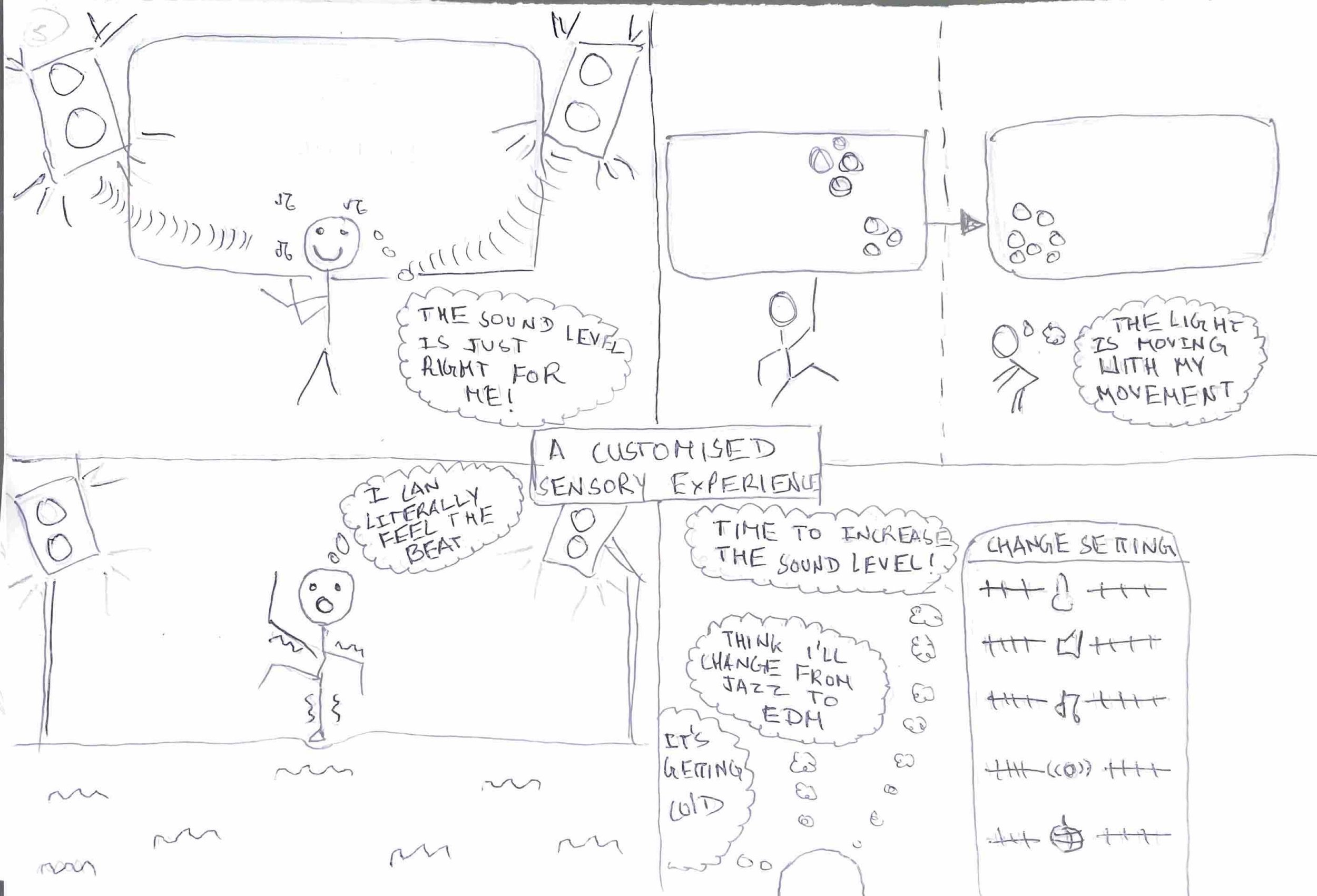
Uses pod to find optimal level of sensory experience to relax senses
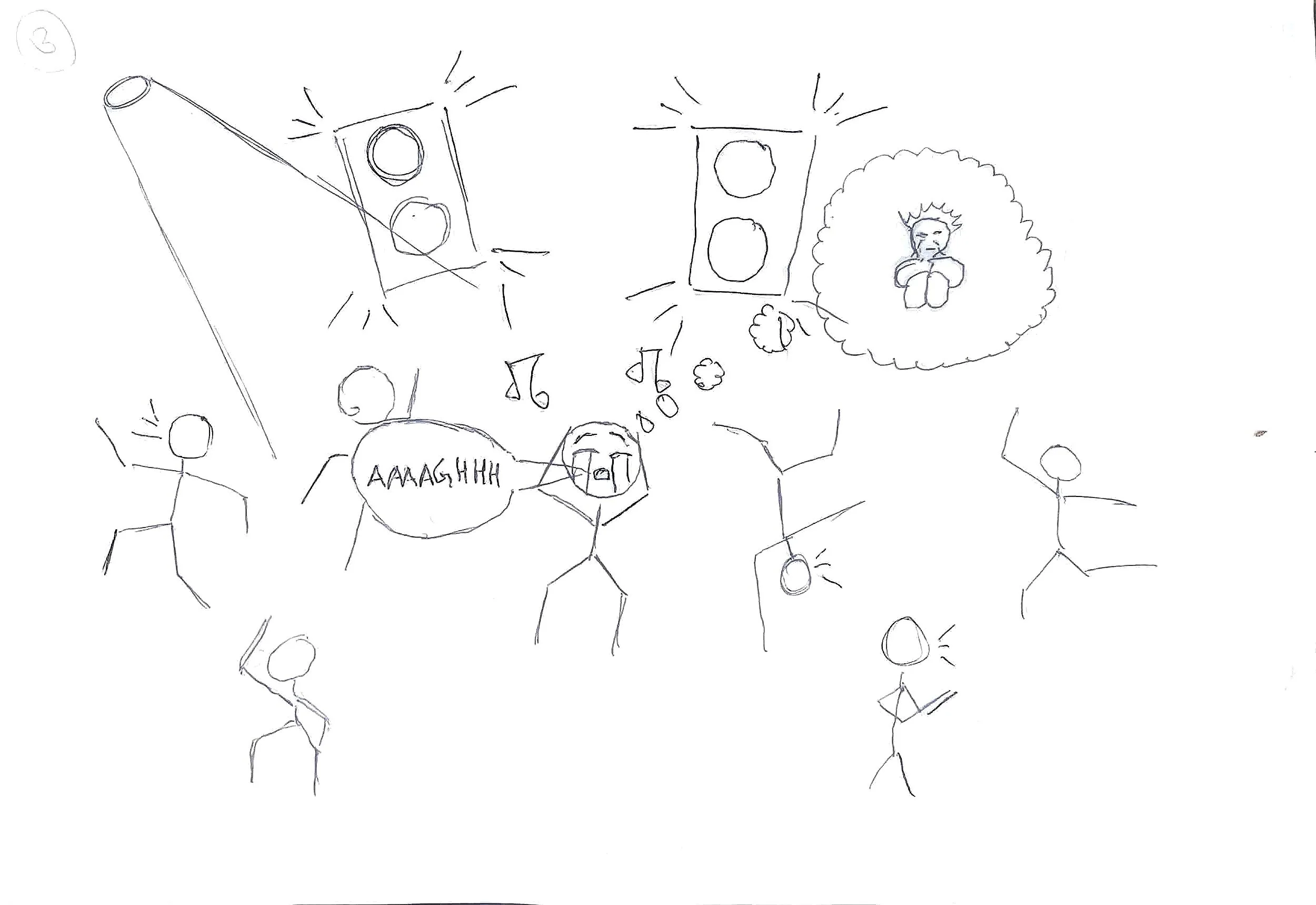
Feeling sensory discomfort
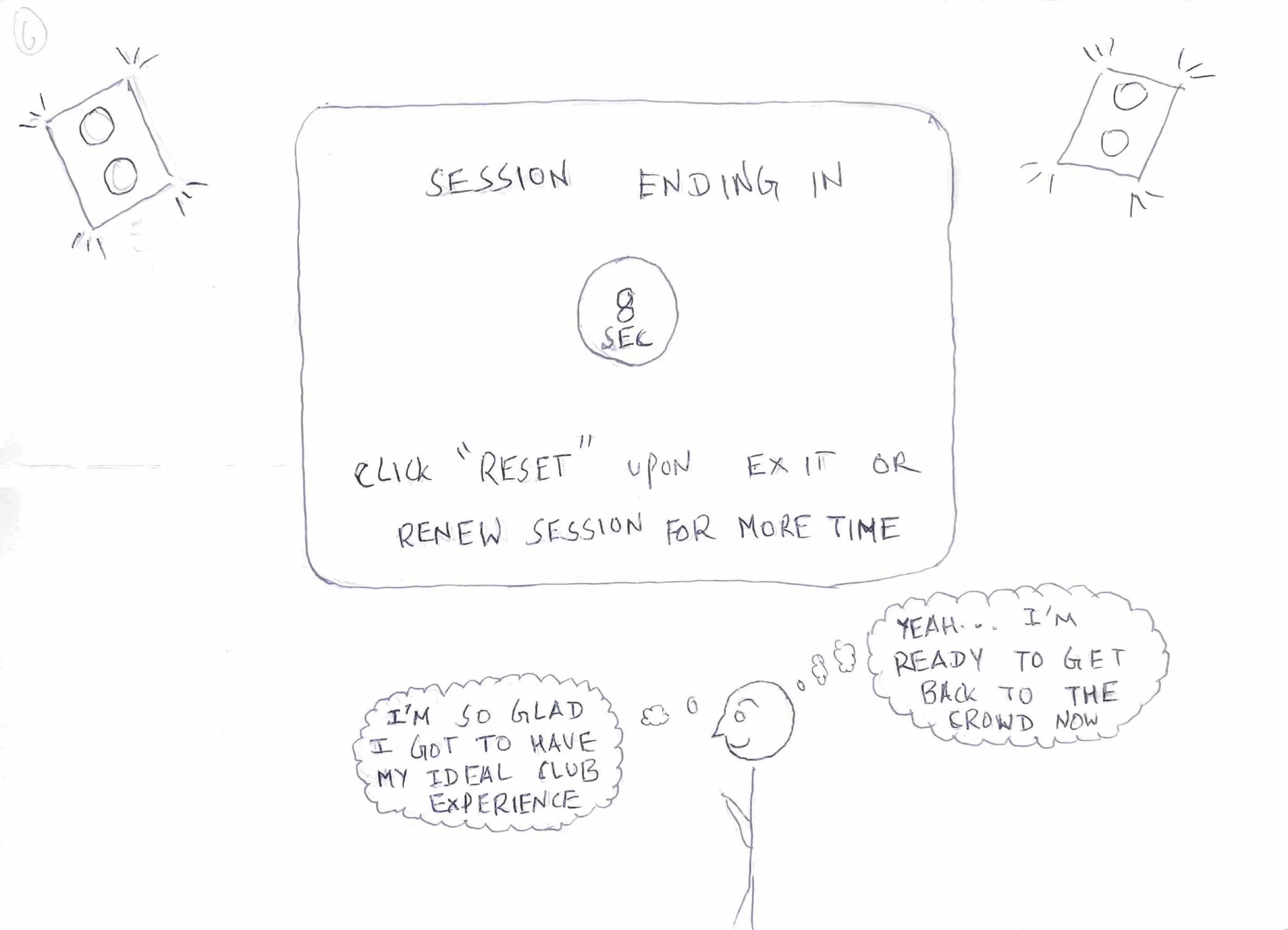
Session ends and visitor is able to return or leave the club, having senses back in control
(From left most image: Concept sketch of intervention and storyboarding the user experience while using the intervention starting from entering the club to end of the session - Ravi Arun. (2025) Assessment 2. Created for Creativity and Entrepreneurship - DDES9015, University of New South Wales)
In addition to these sketches, additional storyboards were created to capture different use cases of the pod that indicate how it can function in two ways:
Integrated within nightclubs to regulate sensory stimulation
As a customised, sensory regulated alternative to nightclubs for intimate settings
Based on these use cases and prototypes, a user journey was mapped to provide better understanding of how the concept would work from the viewpoint of the user.
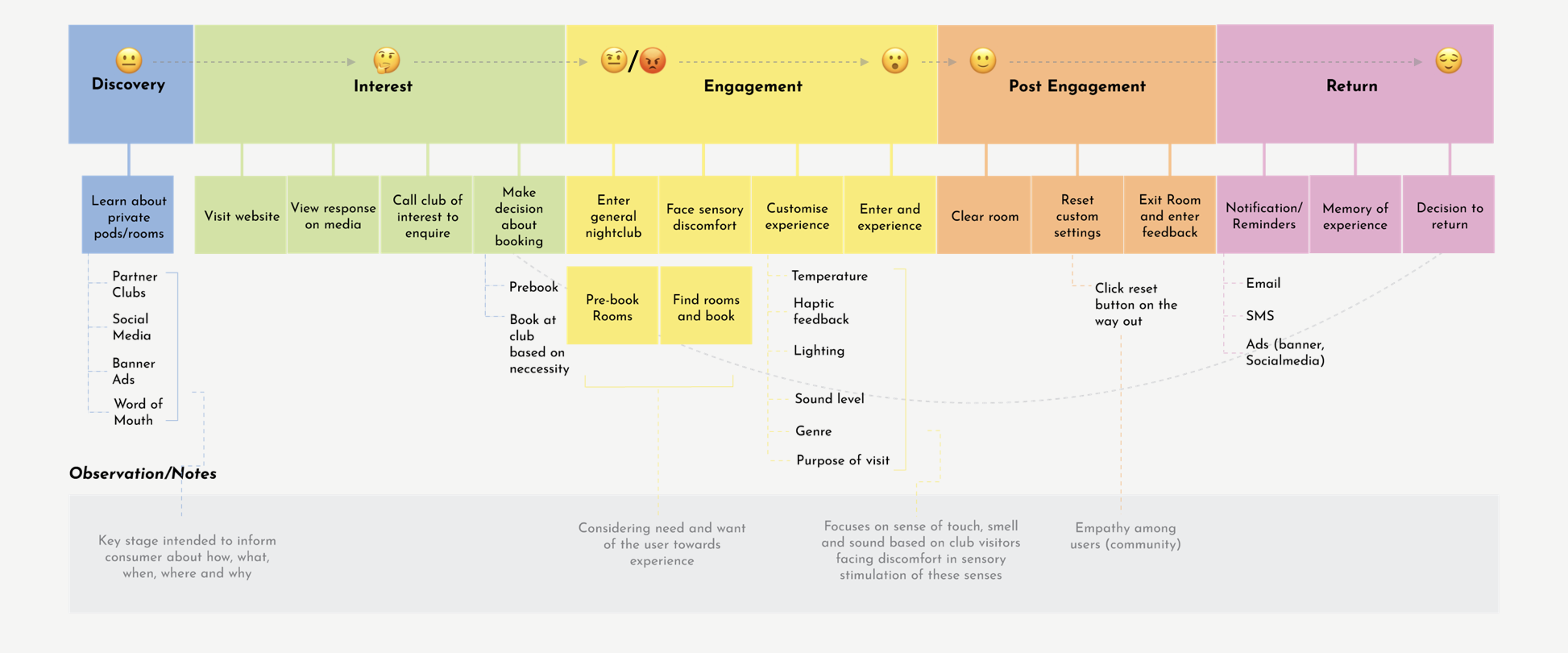
(Mapping user actions through discovery and use of the intervention - Ravi Arun. (2025) Assessment 2. Created for Creativity and Entrepreneurship - DDES9015, University of New South Wales)
Intervention Strategy
Looking at the intervention as a stand-alone business concept, a value to strategy model, competitive landscape graph, lean canvas model and resource flow diagram were created. Each of these helped to evaluate how the intervention could function on its own, with a specific strategic approach in mind.
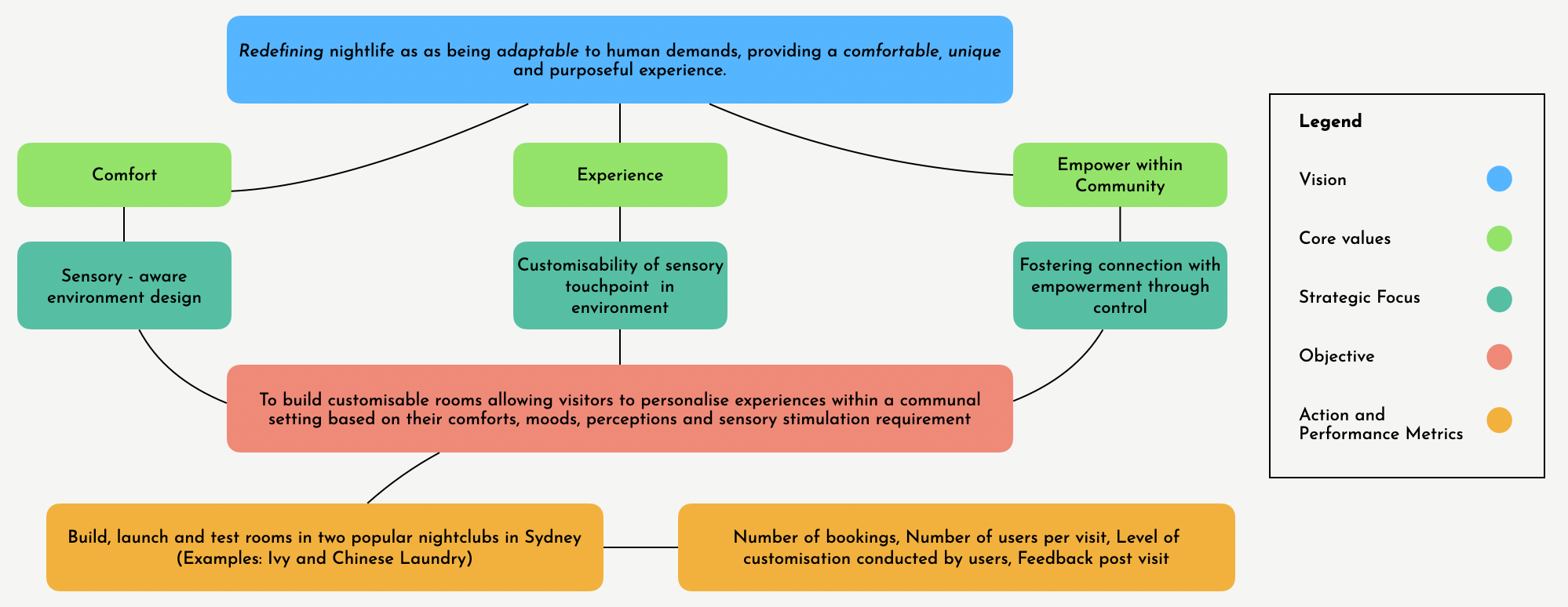
(Understanding how core values extend to achieving strategic focus and guiding action plans - Ravi Arun. (2025) Assessment 2. Created for Creativity and Entrepreneurship - DDES9015, University of New South Wales)
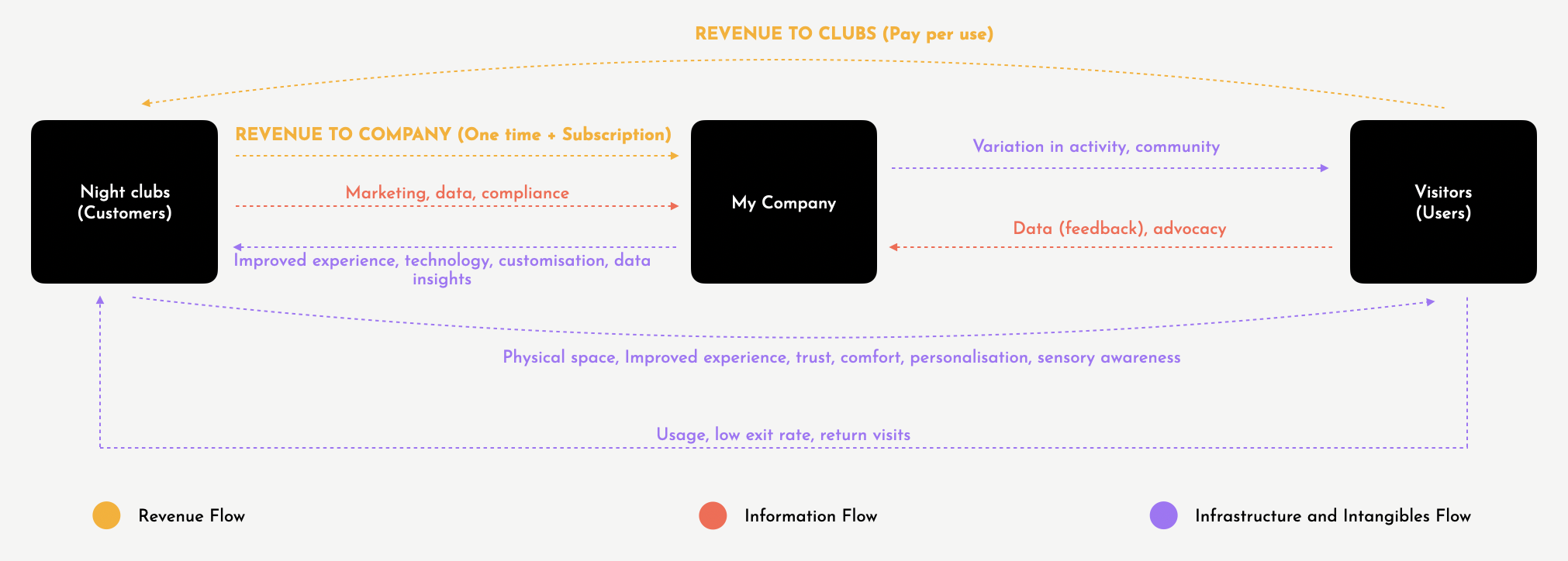
(Defining flow of tangibles and intangibles across different components and core users of the intervention - Ravi Arun. (2025) Assessment 2. Created for Creativity and Entrepreneurship - DDES9015, University of New South Wales)
Branding Elements
After exploring strategic concepts for the intervention, elements of branding were looked into to define a specific identity for the intervention. The name SenCe (Sensory + Balance) was finalised for the intervention as it adequately captured the essence of the intervention and is a short name that attempts to capture attention with a play on the spelling of an original word “Sense.” A logo was created along with defining the brand personality.

(Logo for brand name SenCe - Ravi Arun. (2025) Assessment 2. Created for Creativity and Entrepreneurship - DDES9015, University of New South Wales)
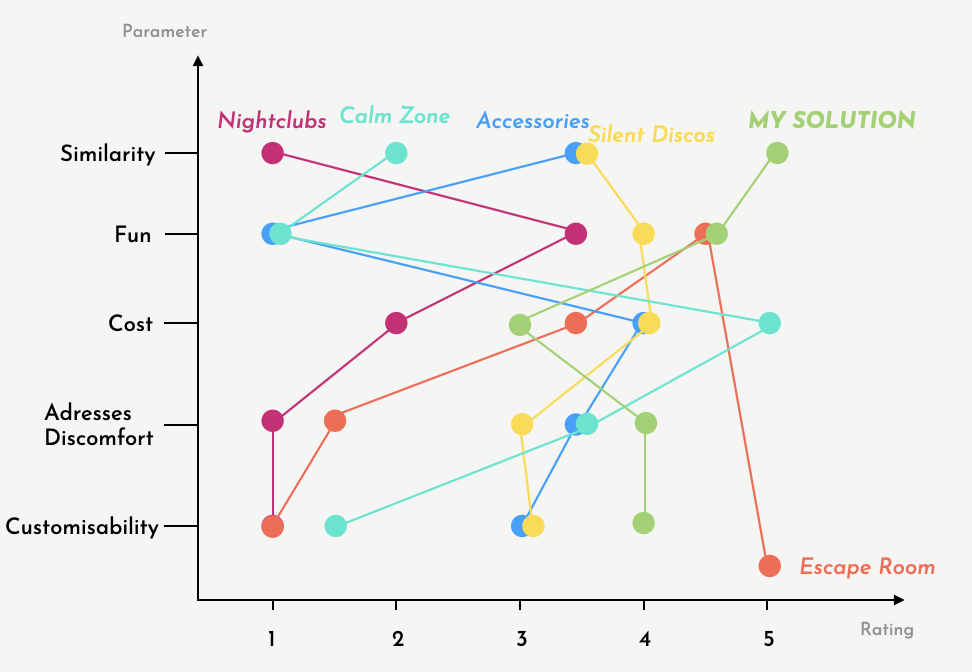
(Competitor landscape graph to explore comparisons with respect to different parameters - Ravi Arun. (2025) Assessment 2. Created for Creativity and Entrepreneurship - DDES9015, University of New South Wales)
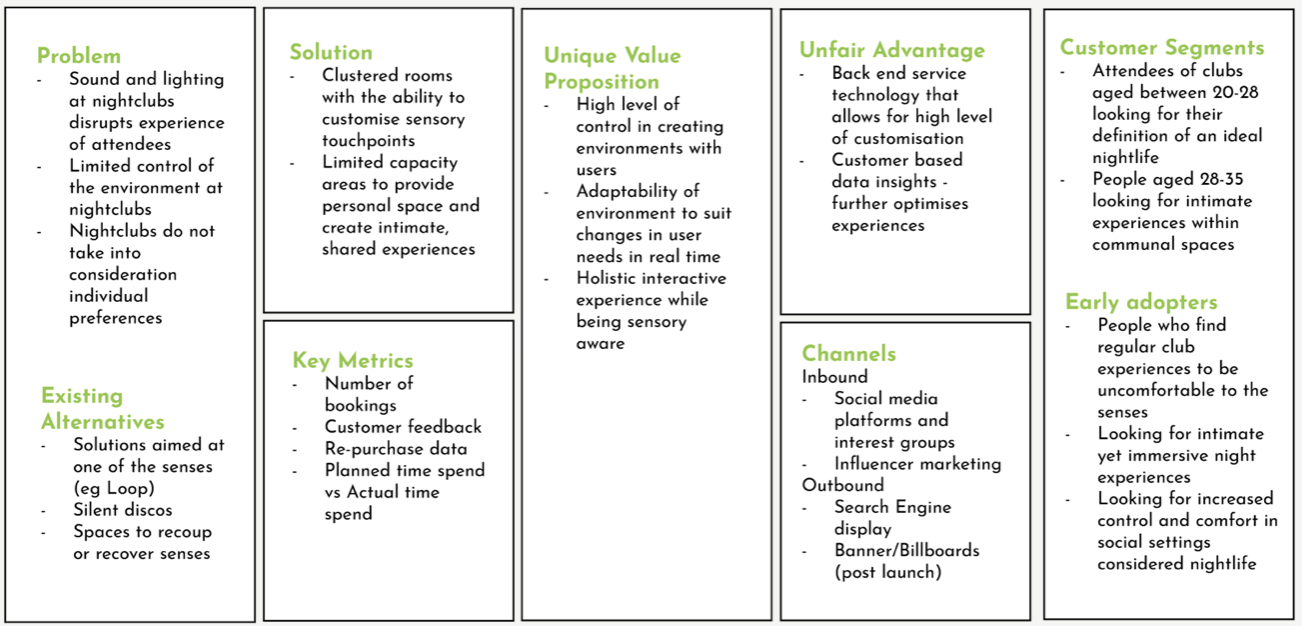
(Lean canvas model omitting financial breakdown due to lack of first hand information on costs - Ravi Arun. (2025) Assessment 2. Created for Creativity and Entrepreneurship - DDES9015, University of New South Wales)
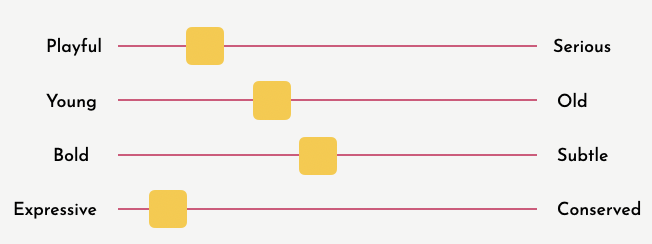
(Brand personality and spectrum - Ravi Arun. (2025) Assessment 2. Created for Creativity and Entrepreneurship - DDES9015, University of New South Wales)
Reflection
Working on SenCe was an enjoyable process. Having pursued marketing during my undergraduate studies and having explored entrepreneurial strategies during my time in school, I learned many new things. Aside from the theoretical frameworks that I had not been previously exposed to, I found it to be extremely fascinating to explore how design and business strategy work together. We often expect to be doing one specific job or role when we specialise in a field but this project reinforced my belief in interdisciplinary approaches and how different disciplines merge in the creation of an intervention. While the prototyping process was at a low-fidelity level, the project allowed me to truly explore strategic concepts in relation to the prototyped concept. Within similar projects in the future, I would look to go beyond the scope of what I have explored in this project by engaging with prototyping at different levels and conduct rigorous testing of the prototype and strategic aspects.